
Street-level 5G deployment changes the physical logic of fiber infrastructure. Instead of serving relatively dispersed premises along long access routes, dense small-cell networks can place radio sites close together, often around poles, buildings, transport corridors, and other urban assets. That pattern creates shorter cable routes but more connection points, branches, and access locations.
A microduct for fiber optic cable must consequently support a network that is compact in distance yet complex in topology. DEKUMA is an extrusion machinery manufacturer whose communications solutions include equipment developed for microduct and microduct-bundle production.
Why Small-Cell Networks Need a Different Duct Strategy
FTTH networks generally organize distribution around homes, buildings, and neighborhood access points. Small-cell infrastructure follows another logic: the fiber route must reach radio locations positioned according to coverage and capacity requirements. ITU-T G.Sup75 specifically addresses 5G small-cell backhaul and midhaul requirements, including capacity, latency, synchronization, availability, and topology. This makes physical access planning inseparable from the transport architecture.
Shorter runs can actually increase the number of intervention points. One street section might contain several radio sites, each requiring a connection to the transport network. Instead of designing one long route with relatively few branches, planners may need repeated lateral connections from a common pathway. A microduct network therefore benefits from a layout that accommodates localized access without turning every future connection into a major civil-works project.
The fiber itself also changes the way duct capacity should be considered. Small-cell backhaul can involve different fiber counts and transport architectures depending on whether a site connects directly, shares an access network, or participates in a more distributed topology. Nokia notes that fiber or copper Ethernet remains a backbone option for small-cell backhaul, while ITU guidance identifies fiber as one of the wired transport choices for 5G small-cell systems. Capacity planning should consequently look beyond the initial radio installation and consider how the route may evolve.
Branching and Access Become Central Design Issues
Traditional FTTH routes often move outward from an aggregation point toward increasingly smaller distribution areas. Small-cell deployment can create a more irregular pattern because radio locations depend on street geometry, coverage objectives, available mounting structures, and local permitting conditions. Ericsson describes street-level small cells as part of urban 5G capacity planning and identifies wired and wireless transport options for these sites. The duct pathway must accommodate that physical irregularity.
Branching points deserve particular attention. Every branch introduces another location where technicians may need to identify, access, split, or redirect fiber. Poorly planned branches can consume spare capacity quickly and make later expansion difficult. An effective layout separates the questions of present fiber demand and future pathway capacity: the installed cable count may be modest today, while the duct system still needs enough room for later additions.
Access chambers also take on a different role in dense deployments. Rather than functioning only as periodic maintenance points along a long route, they can become strategic locations around which several small-cell branches are organized. Chamber size, bend space, cable slack management, drainage, traffic exposure, and technician access all influence the practical usefulness of the network. The physical chamber should support the topology rather than simply follow a fixed spacing rule.
Matching Microduct Configuration to Fiber Density
Bundle configuration is another area where dense networks differ from conventional access design. A route serving several nearby radio sites may need multiple ducts with clearly separated pathways, while another branch may require only a small number of fibers. Excessive capacity raises material and installation costs; insufficient capacity can force disruptive additions later. The correct balance depends on the expected site density, fiber architecture, and expansion strategy.
Cable dimensions also place limits on duct selection. Corning, for example, specifies certain microcables for installation in ducts with inner diameters as small as 4 mm, while other cable constructions call for larger duct dimensions. Its product data also show that bend-radius requirements vary with cable design. This illustrates why duct inner diameter should be selected against the actual cable geometry and installation method rather than by fiber count alone.
Production Precision for Dense Fiber Pathways
Manufacturing consistency matters because small dimensional differences can affect installation behavior. Inner diameter, wall thickness, ovality, surface characteristics, and longitudinal consistency influence how cable interacts with the duct during pulling or air-assisted installation. These factors become increasingly significant when several small ducts are packed into a limited corridor and each pathway is expected to perform predictably.
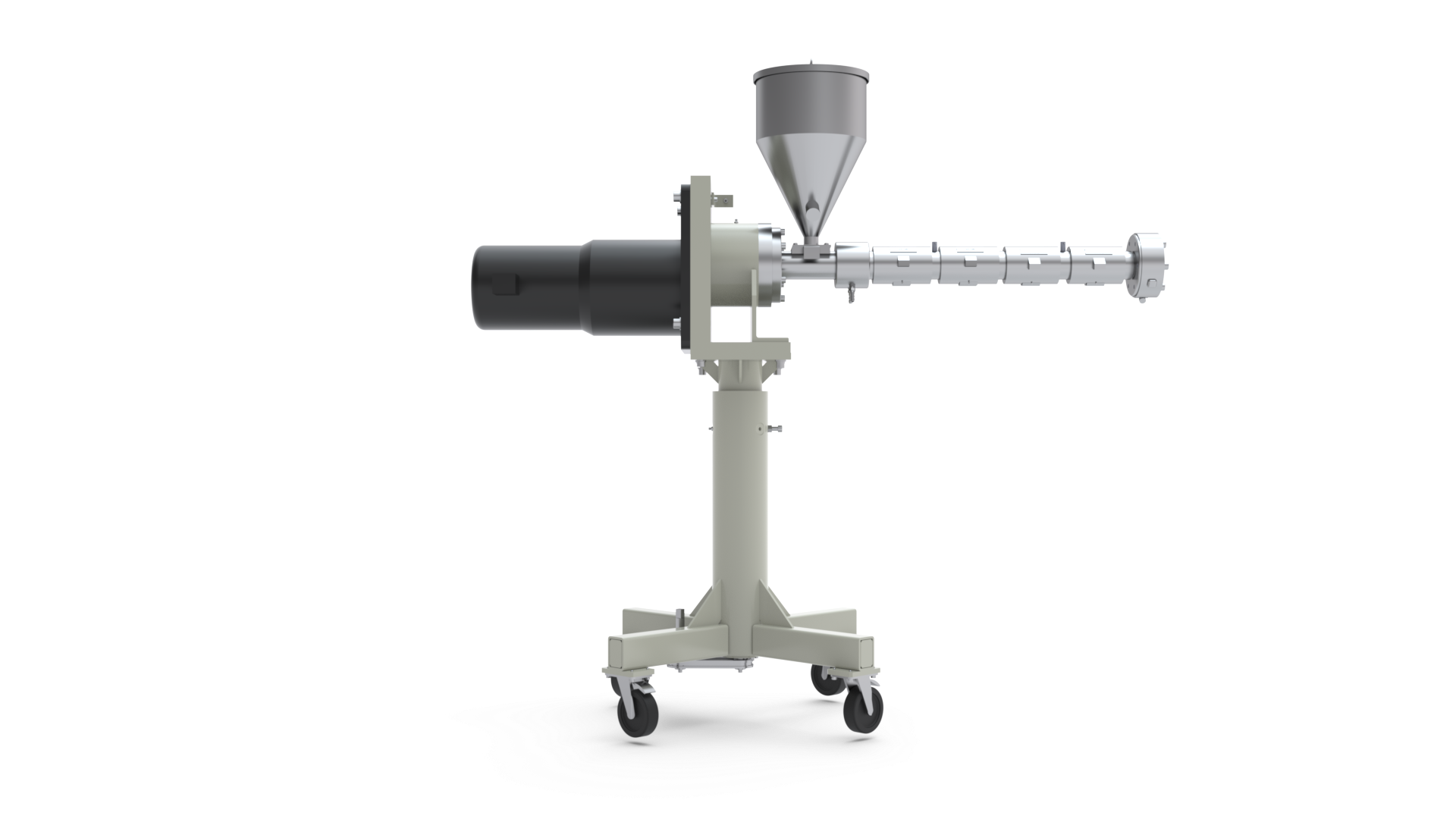
DEKUMA’s Microduct Extrusion Line is designed specifically around microduct and bundle production, reflecting the company’s focus on this communications application since 2011. Its stated development focus includes dimensional precision and stable output for microduct production. For a manufacturer supplying dense urban networks, process consistency is relevant not only to individual duct quality but also to the interchangeability of ducts, fittings, bundles, and installation accessories across a project.
Conclusion
Dense 5G small-cell deployment changes fiber infrastructure from a relatively linear access problem into a highly distributed street-level network. Shorter routes can coexist with more branches, more access points, and greater variation in site requirements. ITU-T guidance recognizes the distinct transport requirements associated with 5G small cells, while industry deployment information shows that fiber remains an important transport option for dense mobile networks.
DEKUMA operates in the extrusion machinery field and has developed microduct production solutions for fiber-optic communications. Its focus on microduct manufacturing provides one example of how pathway production can support increasingly compact network architectures. In practical planning, microduct for fiber optic cable selection is best treated as part of a larger system involving cable dimensions, branch topology, chamber design, installation technique, and future capacity. That broader view allows dense small-cell infrastructure to remain physically manageable even as the number of connected street sites increases.