
When choosing hardtop gazebos, the roof shape matters as much as the frame material. A roof that looks attractive in a product photo may perform differently when exposed to heavy snowfall, strong gusts, or summer heat. For homeowners planning year-round outdoor living, the key is understanding how roof geometry affects weather performance and which features to check before buying.
SUNJOY’s hardtop gazebo collection includes 2-tier, gable, and hip-roof designs, giving homeowners several options for different backyard layouts and climates. Comparing these styles alongside specific product features makes it easier to find a suitable hard roof gazebo.
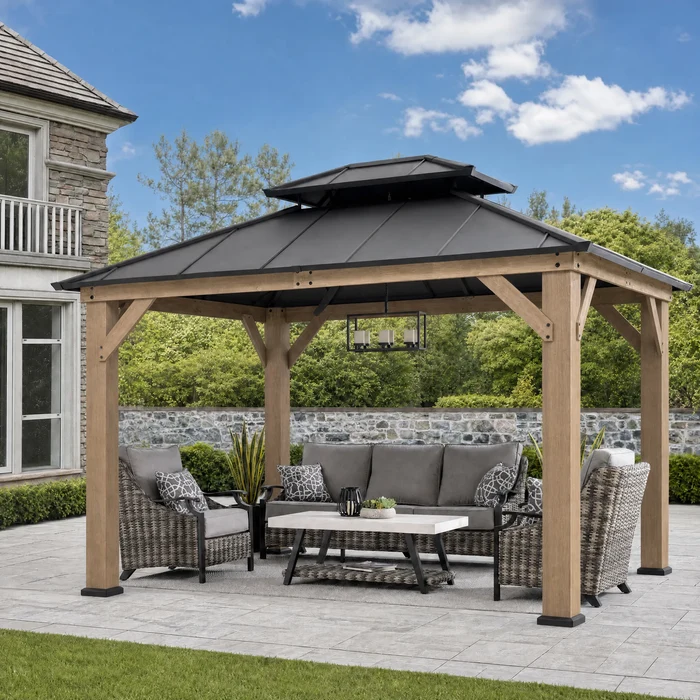
2-Tier Vented Roofs: Prioritize Airflow and Everyday Comfort
A two-tier roof has a raised upper section separated from the main roof, creating an opening that allows warm air to escape. This design is particularly useful for outdoor dining, family gatherings, and covered seating areas during warmer months.
SUNJOY’s Double-Tier Cedar Gazebo 10×12 – Weathered Cedar illustrates this design. It combines a cedar frame with a galvanized steel roof and a ventilated two-tier top. The built-in ceiling hook also provides a convenient place to hang a light or fan, making the structure suitable for an outdoor dining or relaxation area.
The product page lists a wind rating of 50 mph and a snow-load capacity of 3,000 pounds. These specifications provide more useful buying information than roof shape alone. However, the ratings should not be interpreted as a guarantee against every storm, and proper anchoring remains essential.
For snow management, the roof’s slope and rated load capacity are especially important. Snow may accumulate on the main roof, while the raised section introduces additional edges and connections. Homeowners in regions with prolonged or heavy snowfall should follow the manufacturer’s snow-removal instructions rather than assuming the vented design will shed all accumulated snow.
Gable Roofs: A Sloping Design for Snow-Prone Backyards
A gable roof has two sloping sides that meet at a central ridge. Its familiar triangular profile complements traditional homes and creates a distinctive architectural feature in the backyard.
SUNJOY’s Apex Woodgrain Gable Steel Roof Patio Gazebo, 13 × 13 is a specific option to explore in the hardtop collection. Its gable-style roof makes it relevant for homeowners who prefer a more traditional roofline over a double-tier design.
For snowy climates, a gable roof can shed snow effectively when its pitch is sufficiently steep and the surface allows snow to slide. However, the actual result depends on roof angle, temperature, snow density, and structural capacity. Snow can remain on a shallow roof even when the design has two slopes.
Wind exposure also deserves attention. The broad triangular ends of a gable roof can experience substantial pressure when wind strikes them directly. Before purchasing, check the selected model’s wind rating, anchoring requirements, and frame specifications instead of assuming that a sloped roof is automatically storm-resistant.
A gable hardtop gazebo may be a good fit for homeowners who value traditional styling and effective precipitation runoff, provided the product’s specifications match local conditions.
Hip Roofs: Consider Wind Exposure From Multiple Directions
A hip roof slopes downward on all four sides, creating a more compact profile without large vertical gable ends. This shape can help wind move around the structure and may offer aerodynamic advantages in exposed backyards.
SUNJOY’s hardtop gazebo collection includes a dedicated hip-roof category, allowing shoppers to compare available designs with its two-tier and gable options. When evaluating individual models, pay attention to the roof material, support-post dimensions, connection hardware, and documented wind rating.
A hip roof can also shed snow when its slopes are sufficiently steep. However, four sloping sides do not guarantee better snow performance than a gable roof. Roof pitch and snow-load capacity remain critical, especially where wet snow accumulates during repeated winter storms.
For a backyard exposed to changing wind directions, a hip-roof hardtop gazebo may be worth considering. The final decision should be based on the specifications of the exact model and the conditions at the installation site.
Which Hardtop Gazebo Is Best for Snow and Wind?
There is no single roof geometry that performs best in every climate. A two-tier vented roof emphasizes airflow, a gable roof offers a traditional profile with two sloping surfaces, and a hip roof slopes on all four sides to help manage wind exposure.
SUNJOY‘s Double-Tier Cedar Gazebo 10×12 provides a useful example of why product specifications matter: its listed 50 mph wind rating and 3,000-pound snow-load capacity offer concrete information for comparison. Buyers considering the Summit Heavy-Duty Double-Roof Gazebo, 13×15 can also review its listed 50 mph wind rating and 3,500-pound snow-load capacity for the entire roof. These figures apply to the respective products and should not be generalized to every gazebo with a similar roof shape.
Before purchasing, confirm the rated snow load, wind guidance, foundation requirements, and local building-code requirements. Also consider where falling snow could land around entrances, walkways, and outdoor furniture.
Find the Right SUNJOY Hardtop Gazebo for Your Backyard
The best hard roof gazebo balances roof geometry, structural specifications, appearance, and intended use. If ventilation is your priority, start with a two-tier design. If you prefer a traditional silhouette, explore gable-roof options. If wind exposure is a major concern, compare hip-roof models and their documented ratings.
Explore the SUNJOY Hard Top Gazebos collection to compare available styles, dimensions, and materials. By matching a specific model’s specifications to your climate and installation site, you can choose an outdoor shelter that better suits your needs throughout the seasons.