
Modern autonomous navigation, industrial robotics, and augmented reality platforms require instantaneous kinematic data to maintain spatial orientation. In dynamic environments, microscopic sensor bias instability can rapidly accumulate into unacceptable dead-reckoning errors.
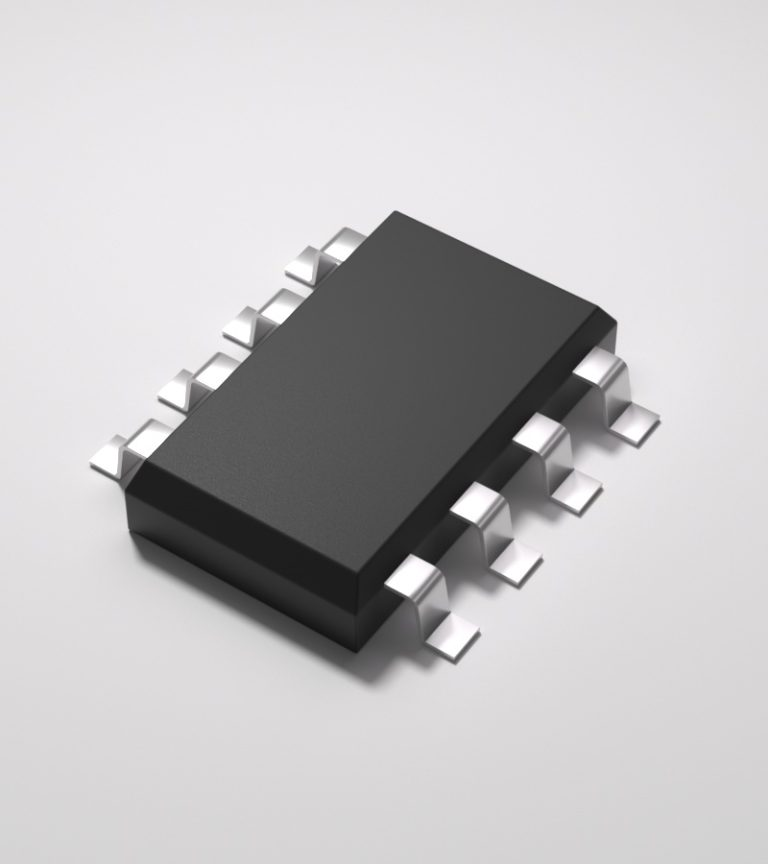
To achieve deterministic positioning under aggressive vibration profiles, engineering teams frequently design their sensory architectures around a TDK InvenSense high-precision 6-axis motion tracking IMU. The IMU provides gyroscope and accelerometer measurements that algorithms can process to estimate motion while accounting for vibration and other sources of measurement noise.
However, translating cutting-edge inertial designs into commercial production requires an agile procurement pipeline. Collaborating with an experienced IMU supplier helps hardware enterprises bypass regional factory allocations and preserve continuous assembly throughput across fluctuating market cycles.
Architectural Breakdown of the TDK InvenSense High-Precision 6-Axis Motion Tracking IMU
Engineered specifically for demanding robotics and high-tier consumer applications, the ICM-42688-P integrates a triaxial gyroscope and a triaxial accelerometer within a miniature 14-pin land grid array. The package footprint occupies merely 2.5 by 3.0 by 0.91 millimeters, conserving crucial printed circuit board space.
Signal fidelity is anchored by an ultra-low noise floor, achieving a gyroscope noise density of 2.8 millidegrees per second per square root Hertz. Meanwhile, the accelerometer registers 70 micro-g per square root Hertz, delivering clean data streams for complex Kalman filtering.
The device incorporates an extensive 2-kilobyte first-in, first-out buffer that acts as an autonomous data reservoir. This deep memory architecture permits the host application processor to remain in low-power sleep modes while kinematic samples accumulate, substantially lowering overall system power consumption.
High-speed host communications are handled through four-wire SPI operating up to 24 MHz, or via the advanced I3C protocol. These rapid digital interfaces ensure low-latency data transfers, allowing flight controllers and stabilization gimbals to execute motor corrections without communication bottlenecks.
Furthermore, the internal architecture integrates the proprietary APEX motion processing engine to execute low-power gesture recognition and activity classification directly on-chip. Offloading basic motion heuristics from primary microcontrollers preserves compute cycles and minimizes battery drain in compact edge devices.
Board-Level Integration and Signal Conditioning Practices
Integrating sensitive microelectromechanical systems into dense multi-layer boards requires stringent layout discipline. Mechanical stress from mounting conditions, PCB bending, and thermal expansion can affect MEMS sensor output and may contribute to bias shifts or measurement errors. PCB design and mechanical assembly should therefore minimize stress around the sensor.
Hardware designers must maintain symmetrical copper distribution across mounting pads to prevent package tilting during solder reflow. Placing the inertial sensor away from primary flexure zones, board edges, and high-frequency thermal emitters preserves measurement accuracy across dynamic temperature shifts.
Power supply stability is important for reliable sensor operation. Placing separate decoupling capacitors close to the VDD and VDDIO pins, while routing power and communication lines away from switching regulators and other noise sources, helps reduce power supply interference.
Isolating digital communication traces from analog sensor supply rails prevents capacitive crosstalk from compromising sensitive sensor readings. Implementing continuous ground reference planes beneath signal tracks guarantees controlled return paths and shields the assembly from radiated electromagnetic emissions in industrial operating settings.
When laying out the ICM-42688-P, engineers should evaluate nearby sources of mechanical vibration, including propellers, speakers, and cooling fans. Sensor placement and PCB mounting should be validated through vibration testing to identify and reduce unwanted mechanical coupling.
Strategic Sourcing Metrics When Selecting a Certified IMU Supplier
The specialized microelectromechanical semiconductor sector experiences recurrent allocation cycles driven by rapid spikes in autonomous vehicle development. When tier-one foundries redirect production lines toward high-margin computing dies, procurement departments often face unexpected lead-time extensions for specialized motion sensors.
To address unexpected component lead-time extensions, UniBetter distributes a wide range of electronic components across robotics, aerospace, and consumer electronics manufacturing sectors. Aligning with an independent distributor grants manufacturing organizations immediate access to uncommitted global inventory when standard factory lead times extend.
Strategic component stocking across centralized logistics hubs located in Singapore and Hong Kong streamlines international freight routing. Maintaining buffer reserves close to major assembly centers eliminates shipping friction, protects against maritime delays, and ensures that surface-mount production lines remain fully populated.
Managing bill-of-materials expenditures in competitive hardware categories requires an analytical purchasing posture that balances spot-market agility with contract forecasting. Sourcing teams monitor worldwide inventory distribution patterns to secure favorable pricing tiers and prevent inflationary cost spikes during market crunches.
When sudden allocation shocks restrict factory deliveries, securing the TDK InvenSense high-precision 6-axis motion tracking IMU through verified independent channels shields manufacturers from costly line-down penalties. Proactive supply arrangements ensure consistent factory output without carrying excessive on-hand inventory reserves.
Authenticity Assurance and Quality Inspection Protocols
Procuring high-performance motion sensors through open-market channels exposes manufacturing operations to significant quality risks, including remarked silicon, refurbished dies, and counterfeit packaging. Substandard inertial sensors exhibit erratic temperature drift, erratic solderability, and premature field failures that can ruin brand reputation.
To eliminate counterfeit risks in secondary supply lines, Unibetter sources and procures electronic components from franchised sources to guarantee 100% authentic, quality-assured and brand-new electronic components. Strict provenance verification prevents non-compliant silicon from compromising sensitive printed circuit board assemblies.
Comprehensive incoming quality screening provides a crucial safeguard before parts reach automated placement machinery. Certified testing laboratories conduct detailed optical inspections, lead coplanarity scans, and packaging seal evaluations to detect latent physical defects or moisture sensitivity issues.
Non-destructive X-ray fluorescence analysis verifies internal bond wire layouts and die placement against golden manufacturer samples. Furthermore, heated chemical decapsulation and marking tests ensure that external package nomenclature accurately reflects the internal silicon die revision and manufacturing lot code.
By enabling procurement specialists to locate needed electronic components and acquire them at lower costs, UniBetter delivers the commercial flexibility required to maintain healthy production margins during volatile market shifts. Transparent procurement intelligence shields capital budgets while keeping mission-critical assembly schedules moving forward.
Synchronizing Engineering Precision with Sourcing Agility
Developing resilient autonomous platforms requires complete alignment between robust hardware engineering and proactive supply management. Advanced motion-sensing solutions like the ICM-42688-P deliver the deterministic spatial orientation necessary for next-generation robotics, navigation modules, and industrial automation equipment.
Nevertheless, cutting-edge circuit designs cannot succeed commercially without an agile, reliable procurement network backing up production schedules. Engaging an established IMU supplier provides hardware manufacturers with the inventory transparency, authenticity guarantees, and price stability needed to navigate volatile semiconductor cycles.
By integrating meticulous board layout rules with disciplined component procurement practices, engineering organizations construct exceptionally dependable products. This unified approach protects production timelines, safeguards commercial margins, and drives sustainable technological leadership in demanding global markets.